Home » Become a Foster Parent
Become a
Foster Parent
Below is a step-by-step guide to becoming a licensed foster or foster-to-adopt parent in Idaho!
Becoming a Foster Parent in Idaho
Foster parents play a vital role in supporting children and families in crisis. Idaho’s vision is for foster families to be a support system—not a substitute for parents—while working toward reunification. When reunification isn’t possible, foster-to-adopt families provide children with the stability of a permanent home.
There is a growing need for families to foster sibling groups, teens, and children with medical or behavioral needs. Families willing to care for children in residential or group care settings can also make a lasting impact by offering them the stability of a family environment.
What to Expect in the Licensing Process
The length of time to become a foster parent depends on how quickly applications and background checks are completed. Our team will support you throughout the process.
After approval, placement timelines vary based on:
- The type of child you are willing to accept (age, needs, etc.)
- The number of children in need of placement
- Whether you prefer short-term or long-term placements
Reunification with birth families is the primary goal and most common outcome of foster care. If this is not possible, the child may become eligible for adoption.
Step 1:
Submit an inquiry below
Submit Inquiry
Step 2:
Attend an Informational Meeting
Upcoming Meetings
Step 3:
Submit an application
Begin Application
Step 4:
Complete a background check
Complete Background Check
Step 5:
Complete training
Step 6:
Complete a Home Study
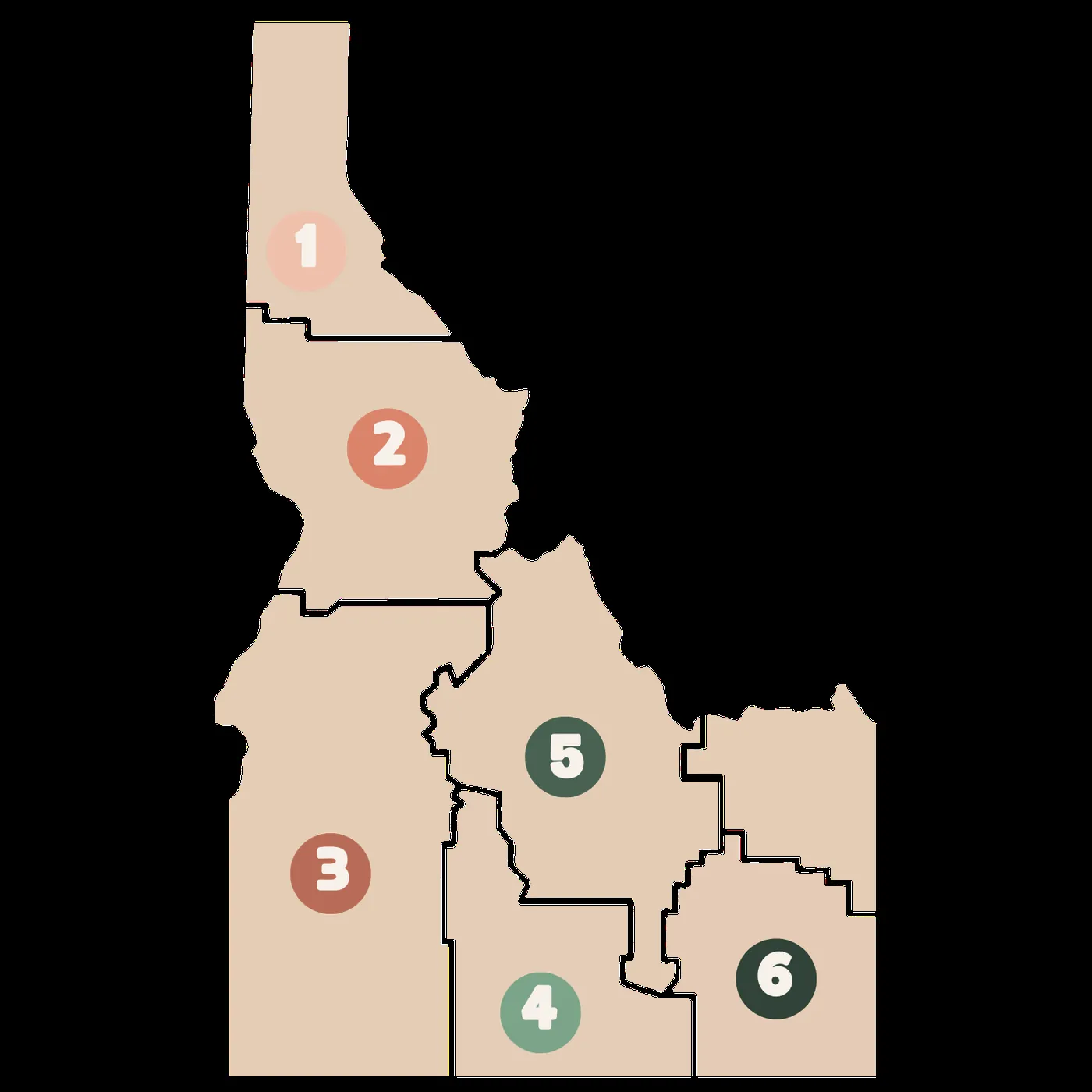
Region 1 (Panhandle): Boundary, Bonner, Kootenai, Shoshone, and Benewah
Region 2 (North Central): Latah, Nez Perce, Clearwater, Lewis, and Idaho
Region 3 (Southwest): Adams, Washington, Payette, Gem, Canyon, and Owyhee
Region 4 (Central): Valley, Boise, Ada, and Elmore
Region 5 (South Central): Blaine, Camas, Gooding, Lincoln, Jerome, Minidoka, Twin Falls, and Cassia
Region 6 (Southeast): Power, Bannock, Bingham, Oneida, Caribou, Bear Lake, and Franklin
Region 7 (East Central): Lemhi, Custer, Clark, Butte, Jefferson, Fremont, Madison, Teton, and Bonneville
Need more info? Check out our most frequently asked questions.
How long does a child typically stay in foster care?
The length of stay varies depending on the case. Some children need temporary care for a few days or weeks, while others may stay in foster care for months or longer until a permanent solution is found.
Do I get to choose which children I foster?
Yes. During the licensing process, you will discuss your preferences, including age range, gender, sibling groups, and any special needs you are comfortable supporting.
Do foster parents receive financial assistance?
Yes. Foster parents receive a monthly reimbursement to help cover the cost of food, clothing, and other expenses for the child. The amount varies based on the child’s needs.
Can I work full-time and still be a foster parent?
Yes! Many foster parents work full-time. Childcare options and support resources are available to assist working foster parents.
Can I foster if I rent my home?
Yes. You do not need to own a home to be a foster parent, but your home must meet licensing requirements.
What support is available to foster parents?
Foster parents have access to: ✔ Training and ongoing education ✔ A Resource Peer Mentor (RPM) for guidance and support ✔ Monthly reimbursement for child-related expenses ✔ Respite care options (short-term care from other foster families) ✔ Local foster parent support groups ✔ Respite care options (short-term care from other foster families) ✔ Multiple community resources
What is a Resource Peer Mentor (RPM) and a Recruitment Coordinator (RC)?
A RPM is an experienced foster parent who provides support, guidance, and mentorship to new and experienced foster families.
A RC is a professional who collaborates with child welfare leadership to recruit and retain foster families.
Want to help, or need help?
Get in touch with Foster + Heart.