What is included.
- 01Business websites and accessible web applications
- 02Customer portals and internal tools built for your workflows
- 03API integrations and workflow automation
- 04Documented code and identified third-party components
- 05Deployment to an agreed hosting environment
- 06Performance, analytics and search engine foundations
How we deliver.
Define the product
We define users, workflows, permissions, data and integrations, then agree the requirements and acceptance criteria.
Build in reviewable increments
We demonstrate and test working features throughout delivery, allowing your team to review content, usability and technical decisions before launch.
Launch and hand over
We check accessibility, security, performance and recovery procedures, then hand over documentation and administrator access with an agreed maintenance plan.
Who this service supports.
- 01A spreadsheet, inbox or manual handoff has become a business-critical workflow.
- 02The current site is slow, hard to update, or disconnected from the systems behind it.
- 03Your team needs a portal or integration beyond the capabilities of its existing software.
Agreed responsibilities
Supported browsers, content and data responsibilities, integrations, acceptance criteria, hosting, maintenance and code ownership are agreed in writing for each engagement. Third-party API limits, license terms and client-supplied content stay visible as dependencies and are tested where the provider allows it.
Related services.
Explore the work and resources.
Improve the website you have, or scope what comes next
A site that breaks after small changes
Before rebuilding, establish the framework or CMS, dependencies, source access and deployment process. Maintenance may be a better first step than a replacement.
Forms and workflows that stop at the inbox
Map who receives a request, what system needs the data and who approves the next action. An integration should solve the handoff as well as the form.
What to bring to the conversation
Share your current URL, the work visitors need to complete and what is difficult today. We distinguish a one-time fix, an ongoing website maintenance scope and a new build. Content updates, dependency maintenance, hosting and third-party integrations are named separately in the proposal.
An illustrative engagement
Illustrative example: a service business needs a mobile enquiry form connected to its existing request system. A project could define the fields, consent, routing, failure handling and administrator workflow, then test those steps before launch. This is an example, not a client outcome.
What affects the cost?
The systems and locations included, technical complexity, current condition, access, migration work and continuing support responsibilities all affect scope. We confirm the work and price in a written proposal.
One-time project or ongoing support?
A project defines a particular outcome and handover. Ongoing support defines continuing coverage. We can discuss either, including working alongside an existing IT employee or provider.
Keep the handover clear
Identify owners, authorized access, current contracts, documentation and acceptance checks before changes begin. An introductory conversation helps define the work; it is not a completed assessment.
Provider handover checklistExisting signed agreements control their scope and commitments. ALCO’s published standard terms do not silently replace them. Read the standard service terms, including client-owned credentials, data and transition responsibilities.
Before you choose a service.
Can you maintain a site another developer built?
We assess the code or CMS, access, documentation and licenses first. We then identify what can be maintained and any work needed to establish a safe change process.
Do we need a completely new website?
Not always. A focused repair or a staged improvement can be appropriate when the existing platform still supports the business. We compare that with rebuilding after discovery.
What should we have ready before asking for a quote?
Bring your URL, priority tasks, example pages, required integrations and the person who can approve content and access. Do not send passwords in an enquiry form.
Will changing providers disrupt our work?
A transition needs an inventory, approved access, a cutover window, acceptance checks and a fallback plan. We discuss likely interruption and dependencies before agreeing the work; no migration is assumed to be disruption-free.
What if we still have an agreement with another provider?
Check its notice dates, ownership provisions and handover obligations with the appropriate decision-maker. ALCO can help identify technical dependencies, but a new enquiry does not cancel your agreement or authorize removing the current provider.
How do we avoid losing access when switching?
Inventory the domain, email, hosting, backups, licenses and their authorized owners before the handover. Transfer documentation and approved access securely, check critical workflows and obtain approval before removing old accounts or canceling dependent services.
Can remote support work for our business?
We review the systems, users and access needed before agreeing coverage. Many tasks can be handled remotely; hardware or site-specific work may need a scheduled visit. Our headquarters and office are in Caldwell, with technicians serving Idaho and scheduled on-site work within agreed scope.
Who handles what when a website moves?
A hosting move or website replacement affects more than files. Agree the responsibilities before changing DNS, retiring an old platform or transferring access.
Your business and current providers
Identify the authorized decision-maker and owners of the domain, DNS, source code, hosting, email and third-party accounts. Confirm contract and license requirements, provide approved access securely and identify who may approve content, downtime and the final cutover.
ALCO’s proposed migration work
The written scope should name what moves, what remains elsewhere, the source and destination, backups, test environment, cutover steps and rollback responsibilities. Application changes, mailbox migration, payment connections and outside-provider tasks are included only when specifically assigned.
Acceptance and continuing care
Agree which pages, forms, sign-ins and integrations must be checked, who accepts the result and how open issues are handled. Keep the old service available until its retirement is approved. Confirm ongoing hosting, maintenance and access ownership separately from the move.
Provider handover checklist · Website maintenance checklist · Discuss a website move
Business website maintenance checklist
Use this to clarify who owns routine website care, how changes are reviewed and what happens when something fails.
- Record who owns the domain, hosting, CMS, source code and renewal accounts.
- Check whether the site still explains your current services, works on phones and lets a visitor find a clear next step. A dated design alone is not a reason to replace a functioning site.
- List the pages, forms and customer journeys that must work, including mobile contact and booking paths.
- Agree who applies updates and how backups and a rollback are checked before a change.
- Test important changes in a suitable preview environment, then review the live result on phone and desktop.
- Check form delivery, broken links and outdated business information without using real customer or payment data in tests.
- Keep a change log and a named support contact. Separate routine maintenance from larger design or feature projects in the written scope.
Is your business website still doing its job?
Use this review before choosing a redesign. Keep what works and identify the business problem first.
- Can a new visitor understand your current services and who they are for without knowing your company already?
- Do mobile visitors see readable text, working navigation and a clear way to enquire or book?
- Are business details, staff information, project examples and links still accurate?
- Do contact forms reach the right team, with a confirmation and an agreed follow-up owner?
- Are the important pages and integrations maintained, with authorized access and a recovery plan?
- Separate content gaps, technical faults and design preferences. Prioritize the changes that help the business before proposing a replacement.
Explore ALCO
- New · Headless CMS
Your site, managed by your AI.
WordPress in the back, a hand-built front end in the front, and myALCO MCP, which Claude or ChatGPT can connect to. Tell it what to change.
See how it works - The client area
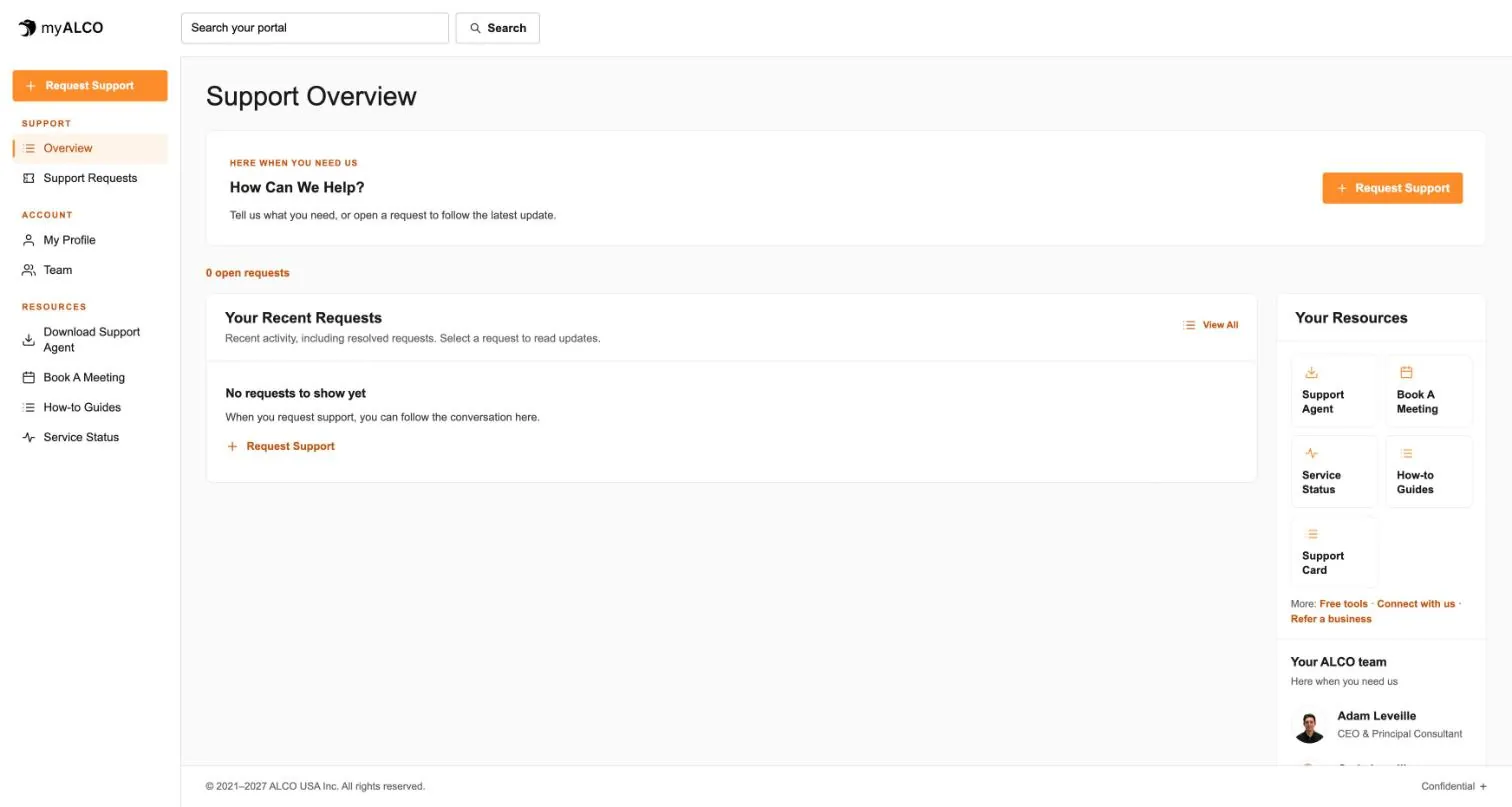
Everything ALCO does for you, in one place.
Requests, your team, invoices, documents, shared credentials and sign-in security. One sign-in, any device. Take the tour.
Tour myALCO - New · Our work
See the sites we have built.
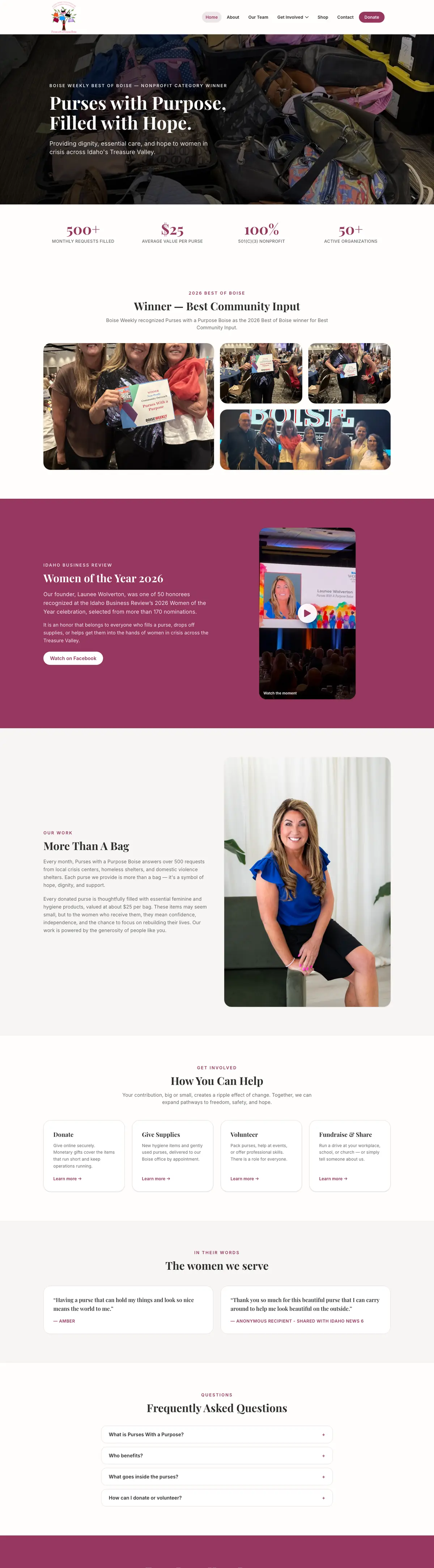
A newspaper rebuilt headless, a parts storefront, two Boise nonprofits, a crochet brand and our own site. Every screenshot is the full page, scrolling live.
Browse our work