- 3-year
- roadmap tied to where the business is going
- Annual
- budget with capital and running costs laid out
- Quarterly
- reviews with numbers, not anecdotes
- Yours
- the decision, always
What is included.
What ALCO does for you under consulting, in plain terms.
A current-state picture
Every system, contract, dependency and expiry date on one page, with the risks ranked. Most businesses have never seen theirs.
The roadmap
What to do, in what order, why, and roughly what it costs, over three years. Urgent maintenance separated from nice-to-have.
The budget
An annual IT budget with capital and operating costs, renewals and the cost of putting things off, in a form your accountant likes.
Vendor and contract decisions
Evaluations and contract reviews done in your interest, not the vendor's. We will recommend against ourselves when that is the right answer.
Procurement guidance
What to buy, what to skip, when to refresh, and how to buy it. Hardware and licences can be supplied through ALCO or elsewhere; the advice is the same.
Risk and lifecycle
Warranties, end-of-support dates, single points of failure and key-person dependencies tracked, with a plan before they bite.
Quarterly business reviews
Service numbers, spend against budget, risks closed and opened, decisions needed. An hour, well prepared.
Board and audit reporting
A concise technology risk and spend summary for a board, a lender, an insurer or an auditor.
Someone to ring
A new location, an acquisition, a software salesman at the door. Call before you sign.
How it works.
Four steps, each one written down as we go.
- 1
Understand the business
Goals, constraints, existing plans, contracts and what keeps you up at night, before any technology talk.
- 2
Build the picture and the plan
Current state, risks, roadmap and budget, presented clearly and adjusted with you.
- 3
Decide and delegate
You decide. Work can go to ALCO, your own staff or another vendor; the advice does not change.
- 4
Review each quarter
Progress, spend, risks and new facts. The plan is updated when the business changes.
Who this is for.
Owners spending on emergencies and renewals
If the IT budget is whatever broke this year, a plan will cost less than the surprises.
Leadership teams and boards
A clear view of technology risk, ownership and spend, in their language.
Growing or changing businesses
New site, acquisition, new leadership, first compliance obligation. The old plan, if there was one, is out of date.



Providers we can source for you
442 providers available through ALCO and our Telarus partnership. We compare them for you and stay your point of contact after the order.





























































































































































































































































































































































































































Frequently asked questions.
Is this just a way to sell us more ALCO services?
The advice is separated from the selling on purpose. Recommendations come with options and costs, you decide, and the work can go anywhere. We have told clients to buy less from us more than once.
How much time does it take from us?
A few hours at the start, then about an hour a quarter for the review, plus the occasional call when a decision comes up.
Do we need a help desk plan with you for this?
No. vCIO stands alone. It does pair well with the help desk, because the people answering the phone are the same ones who know the plan.
Can you review a contract a vendor sent us?
Yes. Software, telecom, hosting, copier leases. We read it, tell you what it really commits you to, and what to push back on.
What does a quarterly review look like?
A short written pack a few days before, then an hour together: service numbers, spend against budget, risks, upcoming renewals and the decisions we need from you.
Explore ALCO
- The client area
Everything ALCO does for you, in one place.
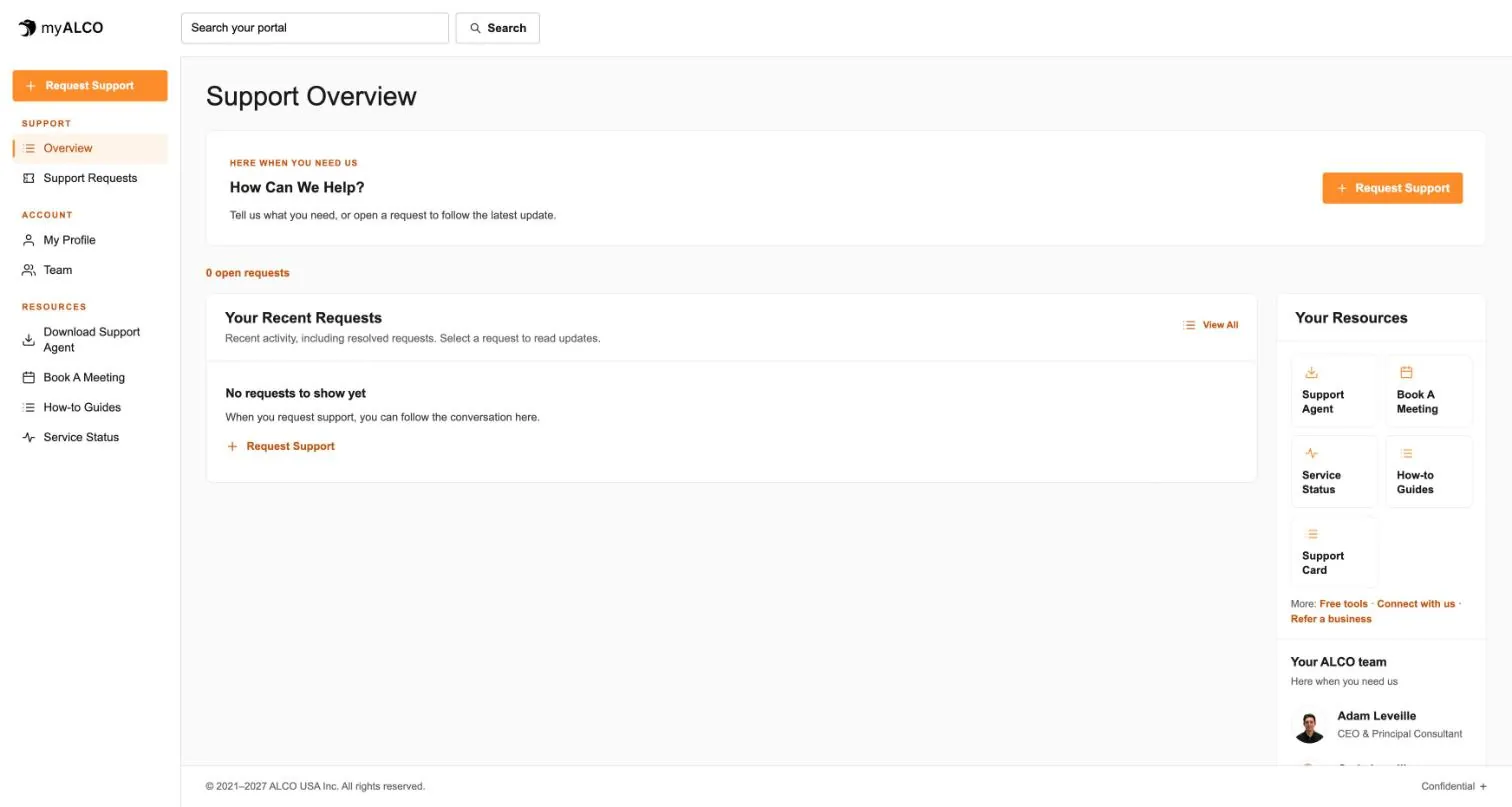
Requests, your team, invoices, documents, shared credentials and sign-in security. One sign-in, any device. Take the tour.
Tour myALCO - New · Our work
See the sites we have built.
A newspaper rebuilt headless, a parts storefront, two Boise nonprofits, a crochet brand and our own site. Every screenshot is the full page, scrolling live.
Browse our work

Clients we’ve worked with
We’ve worked with businesses, nonprofits and community organizations on managed hosting, website development and everyday IT support. These are some of the current and past clients we’ve supported, each with different systems, priorities and people. Explore their stories to see what working with ALCO looks like.











Prepare for an IT assessment that answers business questions
Technology spending is hard to prioritize
Start with the work that is being interrupted, the risks the business accepts and the decisions that need evidence.
A change involves several providers
Define the decision owner, operational responsibilities and handover requirements before choosing a solution.
What to bring to the conversation
The number of systems and locations, available documentation, stakeholder interviews and required deliverables affect cost. Bring the business priorities and current provider agreements to a scoping conversation.
An illustrative engagement
An illustrative assessment could review an agreed set of systems and produce an inventory, findings and prioritized recommendations. Implementation is a separate responsibility unless included in the scope.
What affects the cost?
The systems and locations included, technical complexity, current condition, access, migration work and continuing support responsibilities all affect scope. We confirm the work and price in a written proposal.
One-time project or ongoing support?
A project defines a particular outcome and handover. Ongoing support defines continuing coverage. We can discuss either, including working alongside an existing IT employee or provider.
Keep the handover clear
Identify owners, authorized access, current contracts, documentation and acceptance checks before changes begin. An introductory conversation helps define the work; it is not a completed assessment.
Provider handover checklistExisting signed agreements control their scope and commitments. ALCO’s published standard terms do not silently replace them. Read the standard service terms, including client-owned credentials, data and transition responsibilities.
Before you choose a service.
Is the introductory call a completed assessment?
No. It helps define the question and scope. Any assessment work, deliverables and price need to be agreed separately.
Can our existing IT team be involved?
Yes. Their context is useful; agree access, decision rights and who owns implementation.
Do we have to replace everything the assessment reviews?
A review should distinguish what works, what needs attention and what can wait. Recommendations do not themselves authorize replacement.
Will changing providers disrupt our work?
A transition needs an inventory, approved access, a cutover window, acceptance checks and a fallback plan. We discuss likely interruption and dependencies before agreeing the work; no migration is assumed to be disruption-free.
What if we still have an agreement with another provider?
Check its notice dates, ownership provisions and handover obligations with the appropriate decision-maker. ALCO can help identify technical dependencies, but a new enquiry does not cancel your agreement or authorize removing the current provider.
How do we avoid losing access when switching?
Inventory the domain, email, hosting, backups, licenses and their authorized owners before the handover. Transfer documentation and approved access securely, check critical workflows and obtain approval before removing old accounts or canceling dependent services.
Can remote support work for our business?
We review the systems, users and access needed before agreeing coverage. Many tasks can be handled remotely; hardware or site-specific work may need a scheduled visit. Our headquarters and office are in Caldwell, with technicians serving Idaho and scheduled on-site work within agreed scope.
Prepare for an IT assessment
Prepare useful context for a scoping conversation. Any assessment scope, cost and access are agreed separately; do not send credentials with an enquiry.
- Describe the business problem, affected people, locations and decisions the assessment needs to support.
- Bring the inventory you have: devices, servers, cloud accounts, applications, domains and internet or phone providers.
- Identify each system owner, the person who can authorize access and any supplier or contract restrictions.
- List recurring incidents, known risks, approaching renewals and changes already planned.
- Explain critical workflows, acceptable interruption and recovery priorities. Share relevant documentation through an approved channel.
- Agree the review boundary, evidence needed, deliverables and who decides on recommendations before investigation begins.